

AI-native, white‑box dynamic process simulation software
Irama helps process engineers become experts in understanding their process.
Irama is a dynamic process simulator for building digital twins of process plants. It turns a P&ID into a dynamic simulation built from fundamental dynamic blocks. Each part is modelled to the detail the engineer chooses, from first-principles balances to simple lag models.
Available now · Windows desktop · Runs offline · OPC UA read and write
White box by design
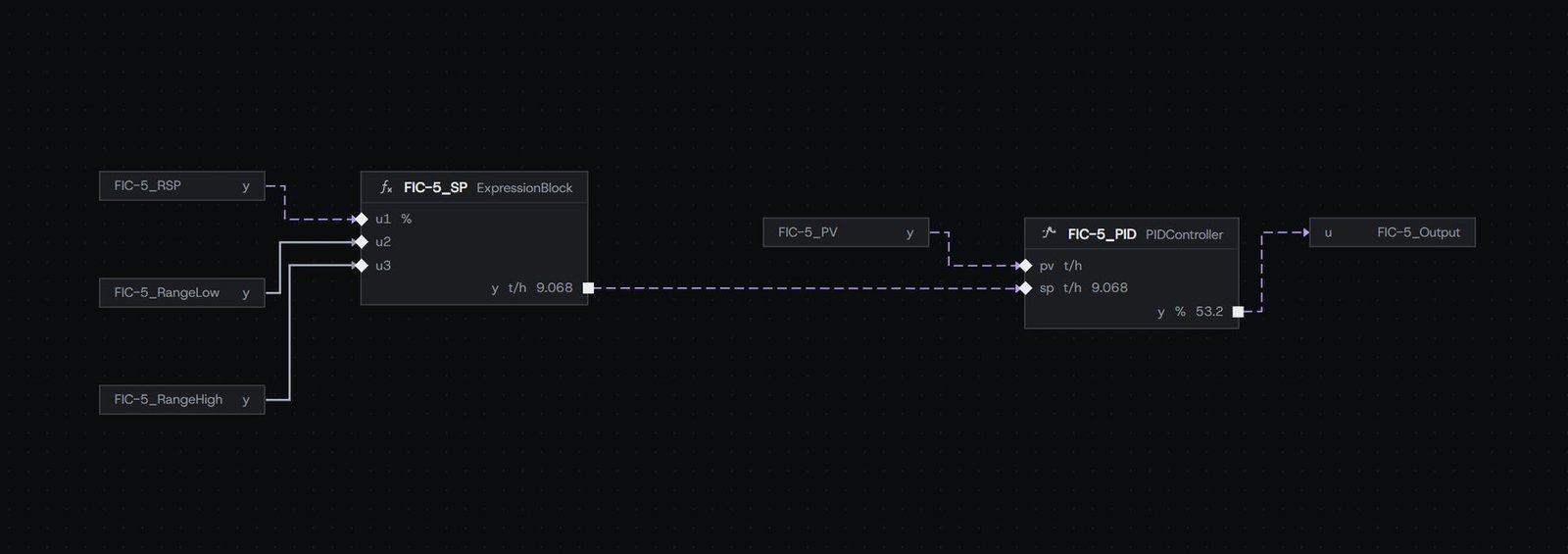
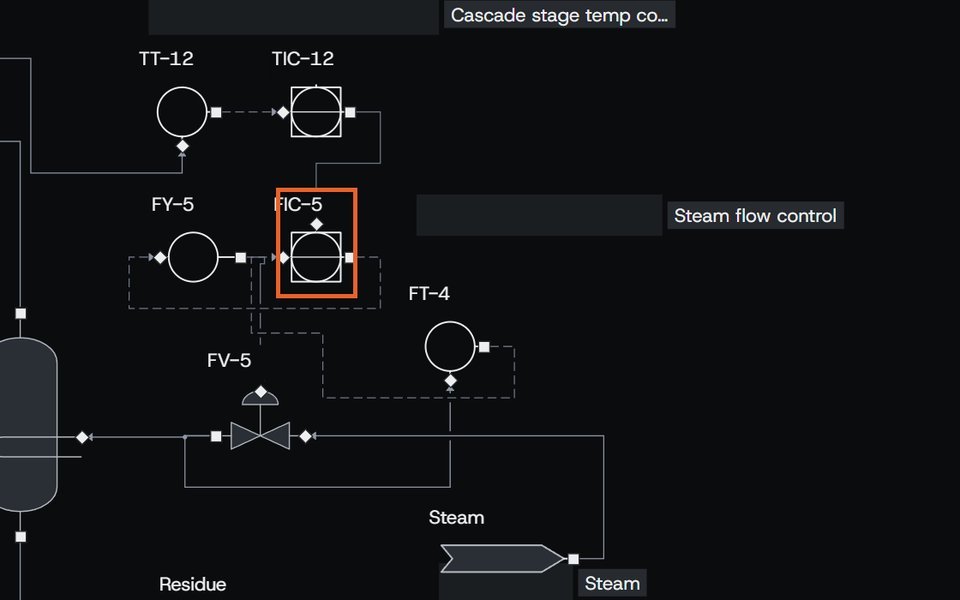
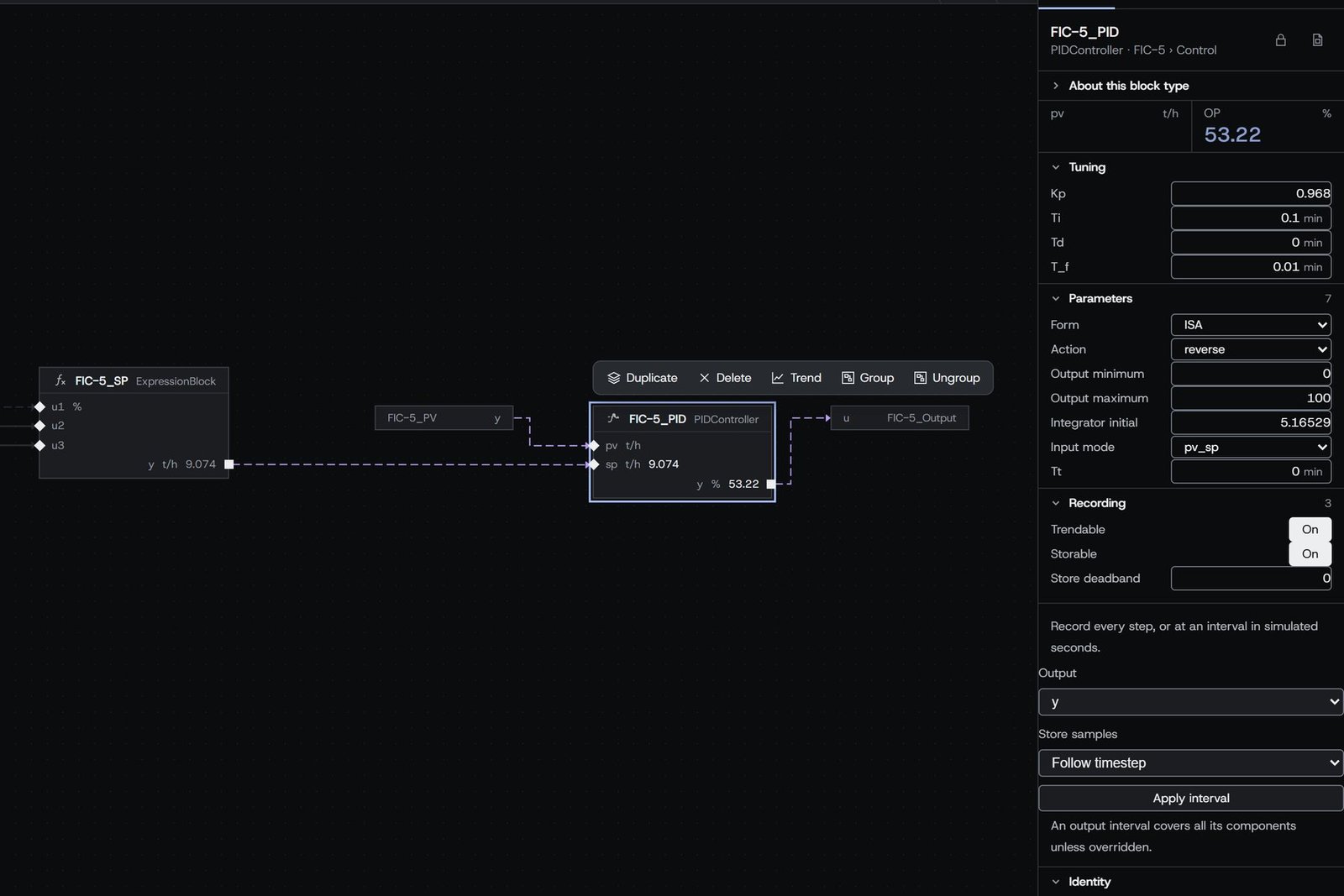
An Irama digital twin is a white-box model. Every equipment symbol opens into the process dynamic blocks it is made of, down to single integrators, lags, valves and controllers. An engineer can read and change how the model behaves at its most fundamental level.
An AI agent works with the same blocks, so a model it builds can be opened and inspected in the same way.

- Ready-made templates
- Equipment and instrument templates from the library, drawn as standard P&ID symbols.
- Your own templates
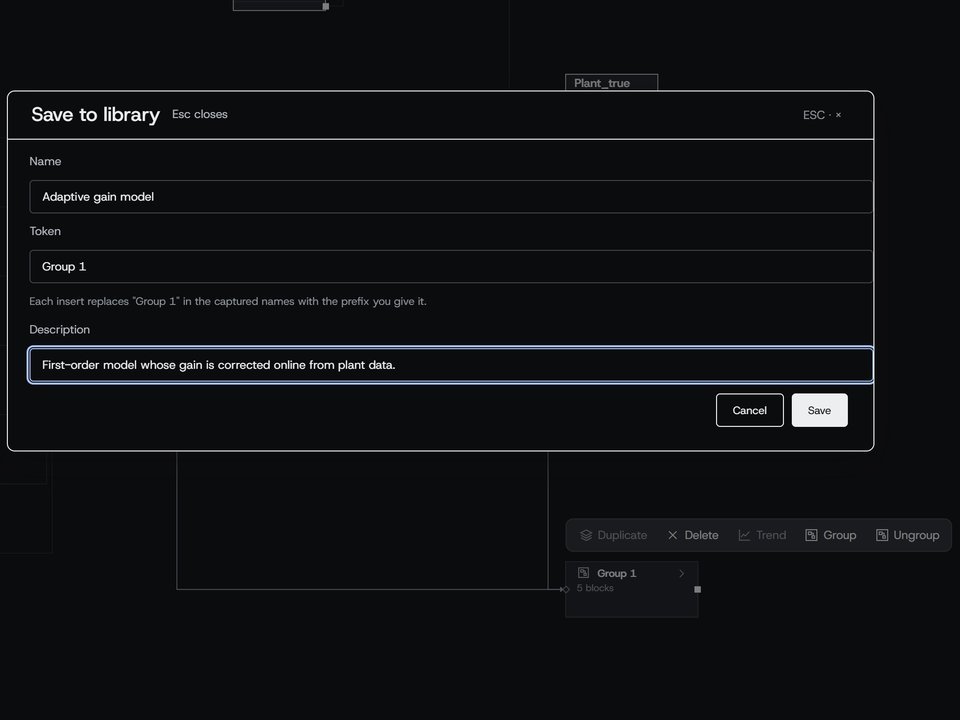
- Build a template from fundamental blocks, save it to the library and reuse it across models.
- Together with AI
- Give an AI agent the P&ID drawing or a description of the process. It drafts the model from the same blocks, and the engineer checks and edits it. The model shown was drafted from a written brief.
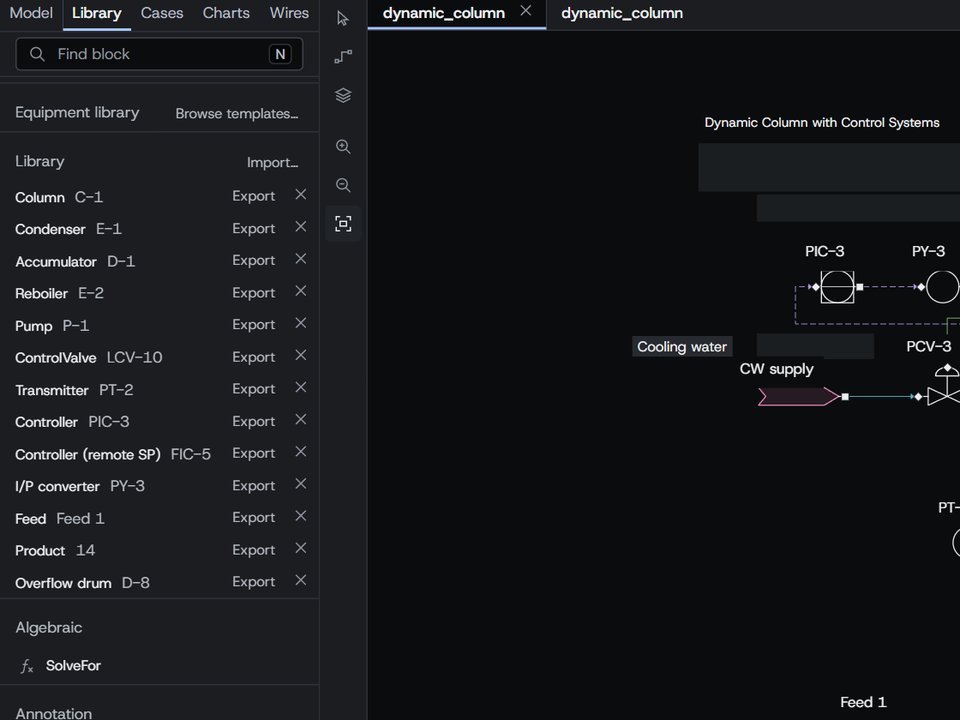
How it works
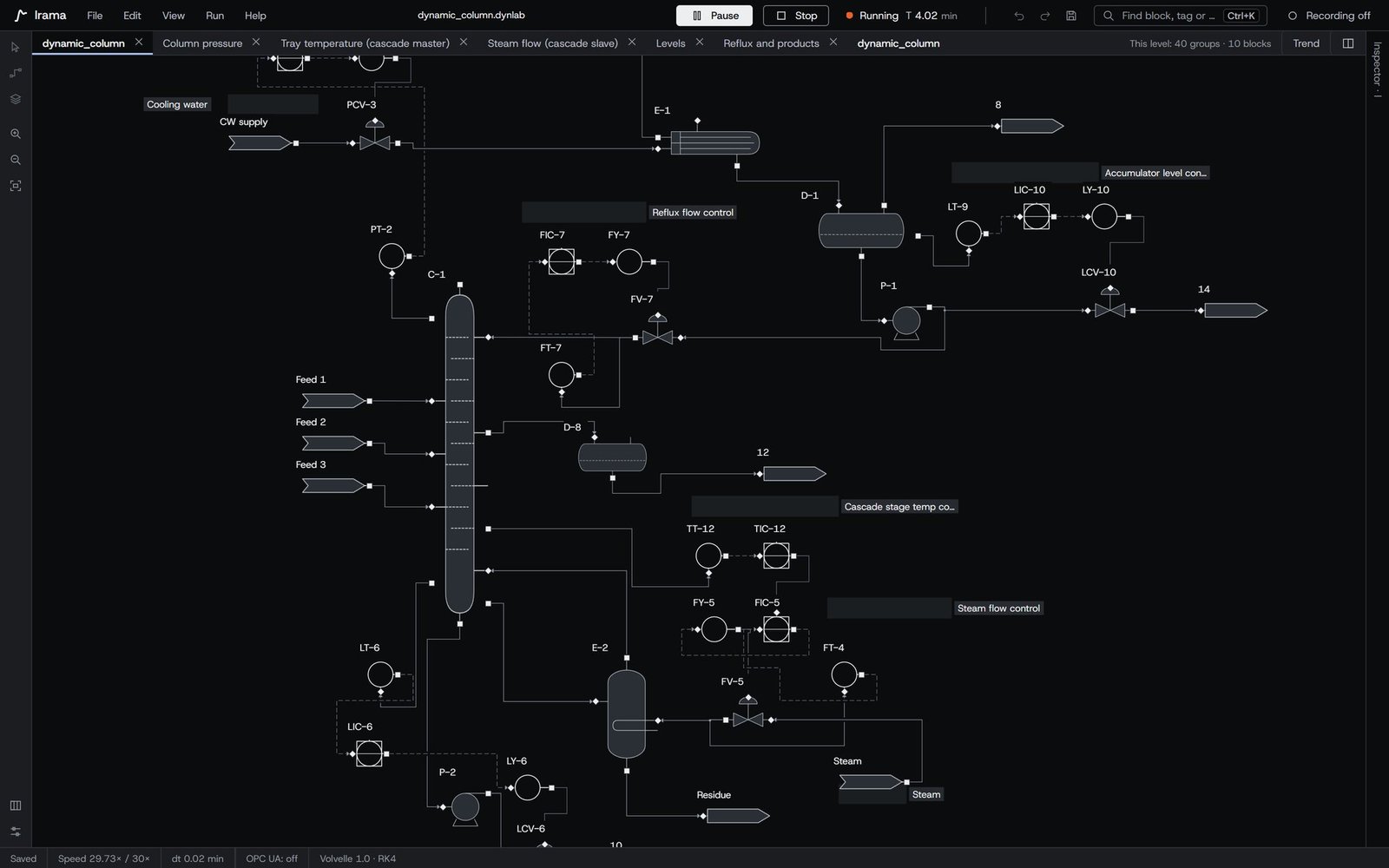
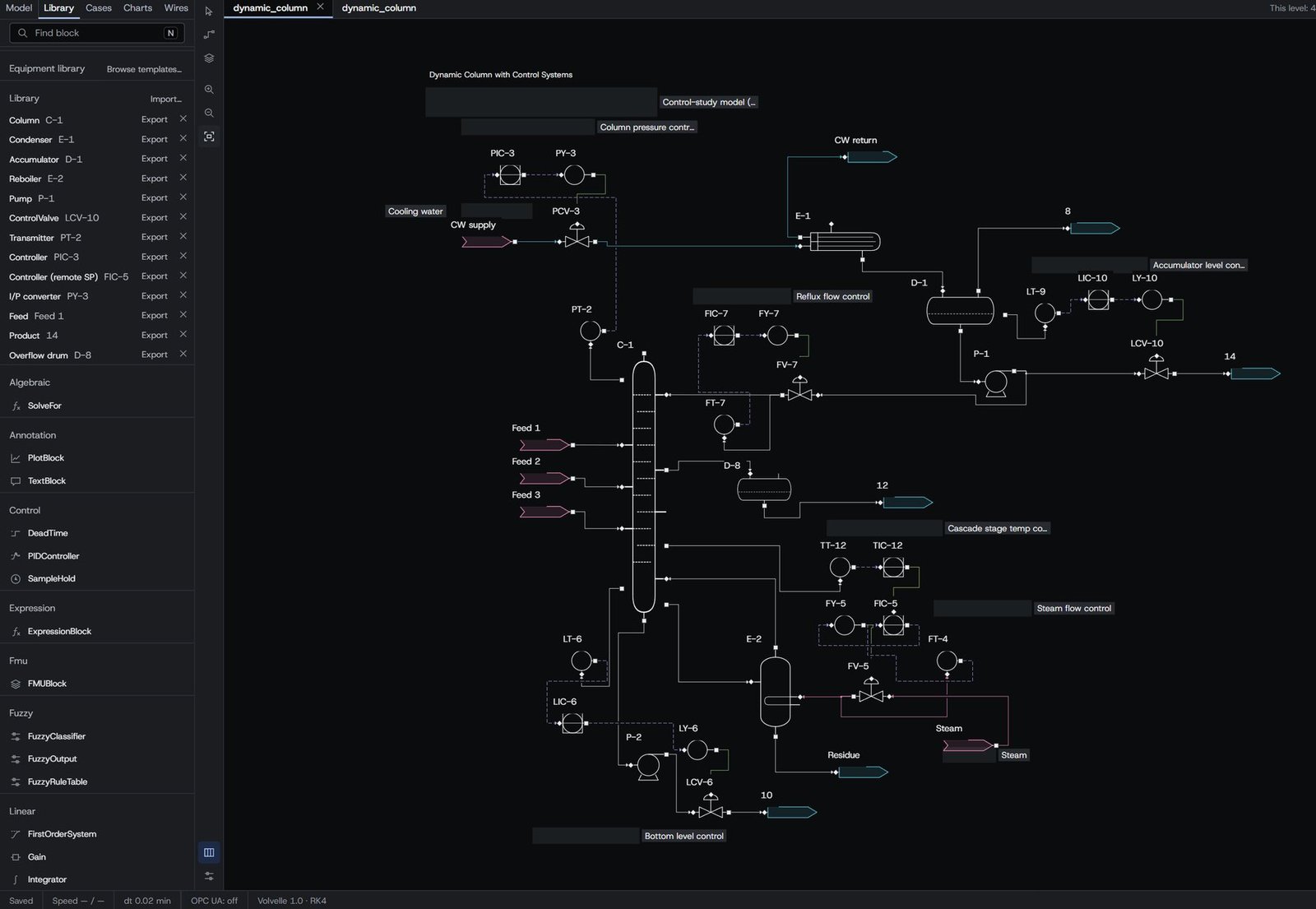
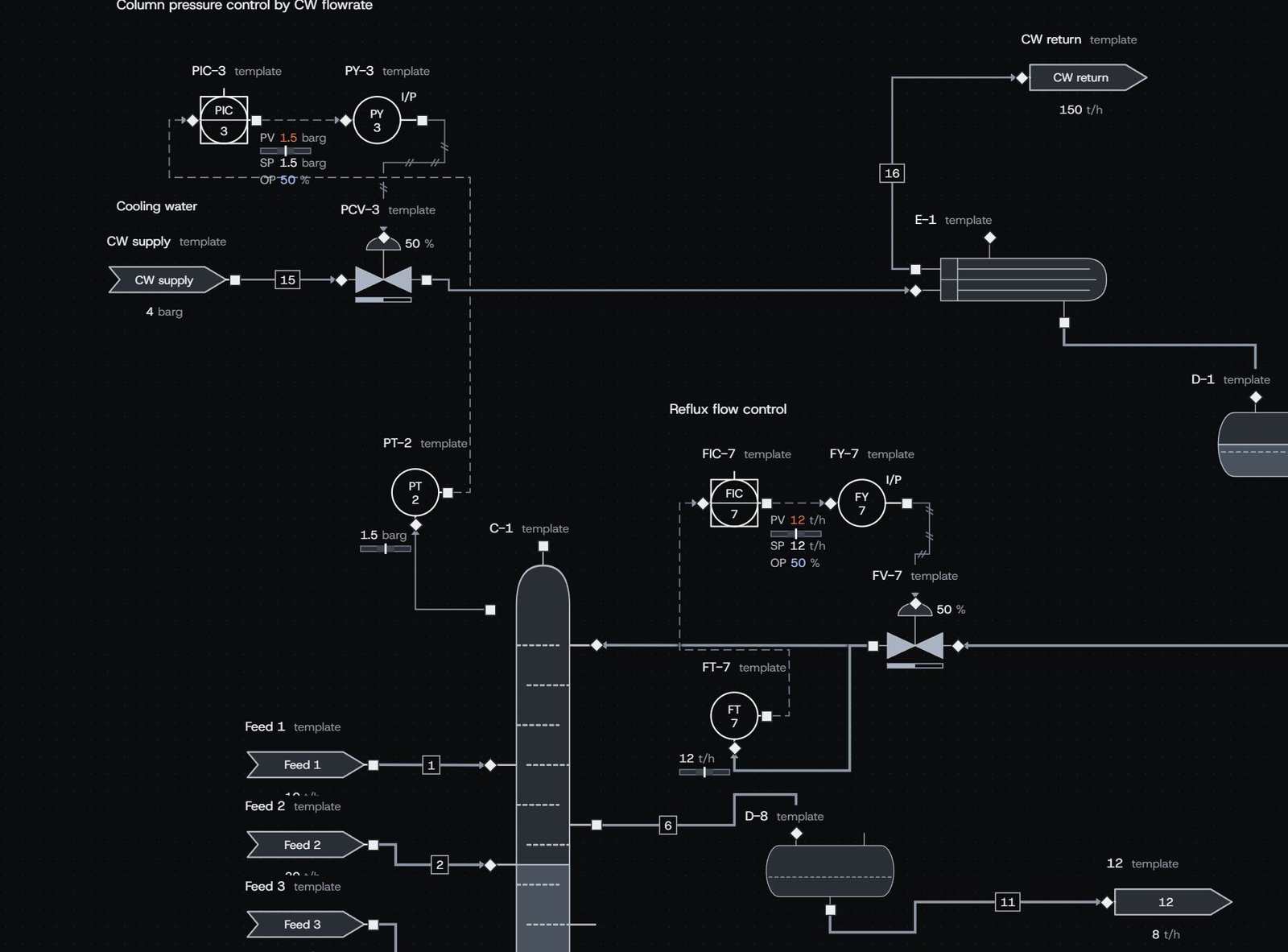
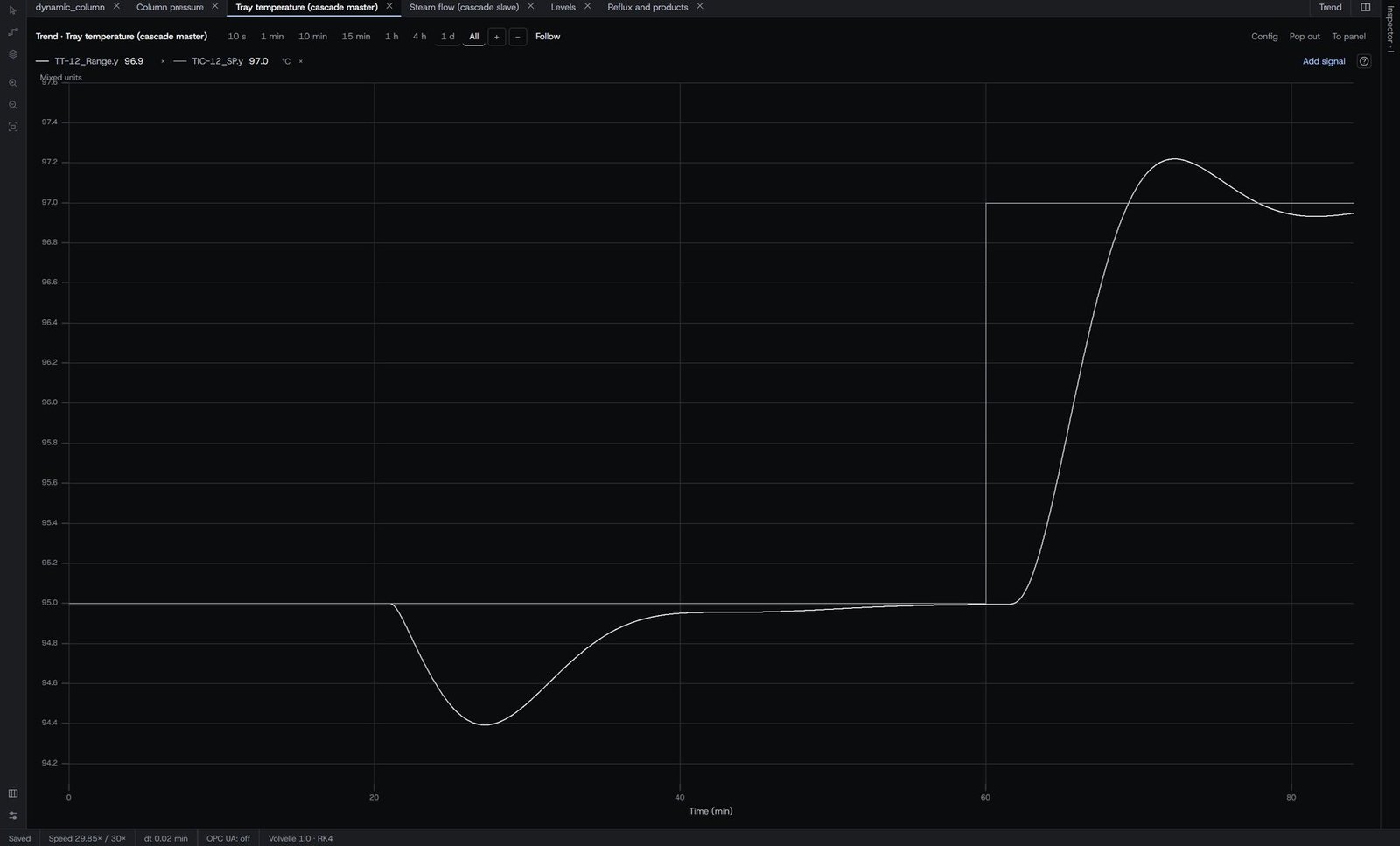
Three screens from a distillation column model with 40 equipment and instrument templates and seven control loops, in the order an engineer uses them.
-
01
Draw the process
Equipment and instruments come from a template library and are connected as they are on the plant's P&ID. The model can be built by hand in the editor, or drafted from the P&ID drawing by an AI agent, then checked and edited by the engineer.
-
02
Run and watch
While the model runs, the P&ID shows live values: measurements, setpoints, controller outputs and valve positions. Runs can be paced to real time or run unpaced: this column computes two hours of operation in about 0.05 seconds.
-
03
Trend the response
Tray temperature over 84 minutes of simulated operation. Feed 2 rises by 4 t/h at 20 minutes and the cascade brings the temperature back. At 60 minutes the setpoint steps up by 2 °C.
Built for a whole operation
Irama is built to model a complete process operation. Templates sit inside groups, so a plant is organised by area, line and unit, and can be opened at any level. The goal is one model of the whole operation, connected to the plant over OPC UA.
- 1,000 control loops
- A test model with 3,834 blocks and 1,000 PID loops runs about 100 times faster than real time on one laptop core.
- 10,000 blocks
- A test model of ten thousand blocks compiles and runs faster than real time on a laptop.
- One model, many levels
- Plant, area, unit, instrument and block are levels of the same model, so detail can be added where it matters without rebuilding the rest.
Keeping the model matched to the plant
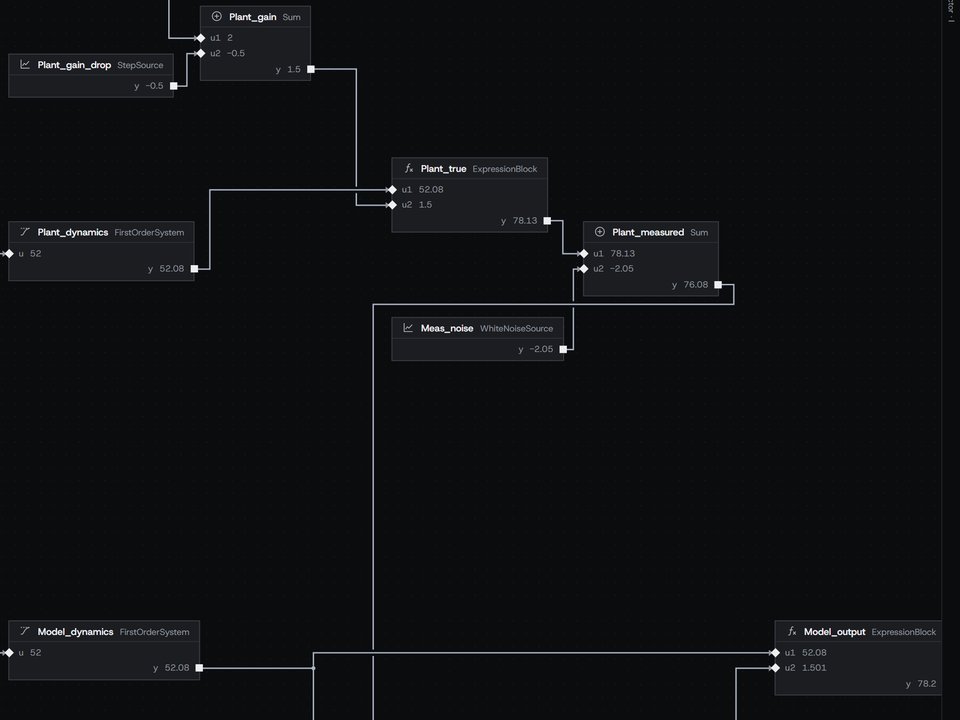
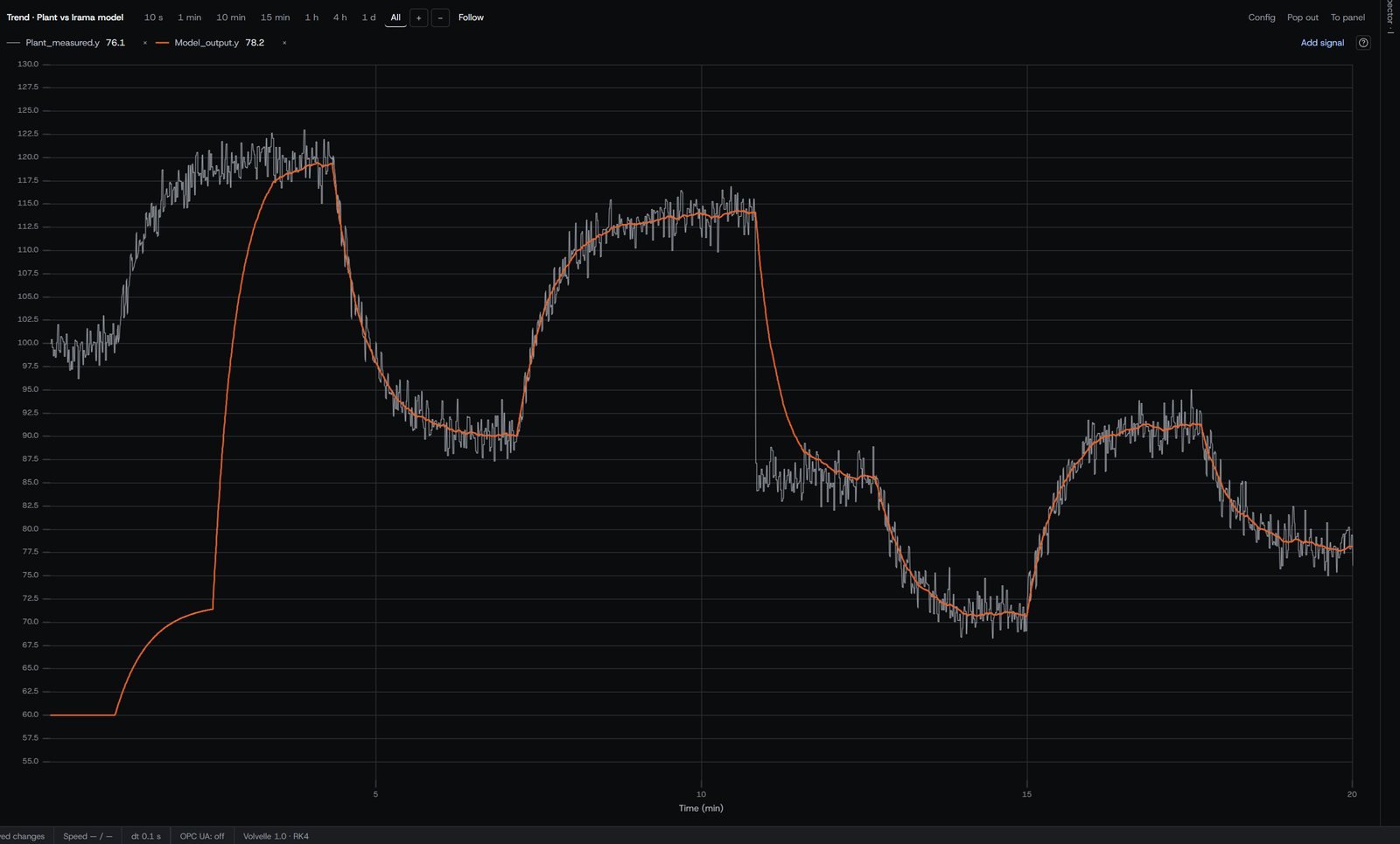
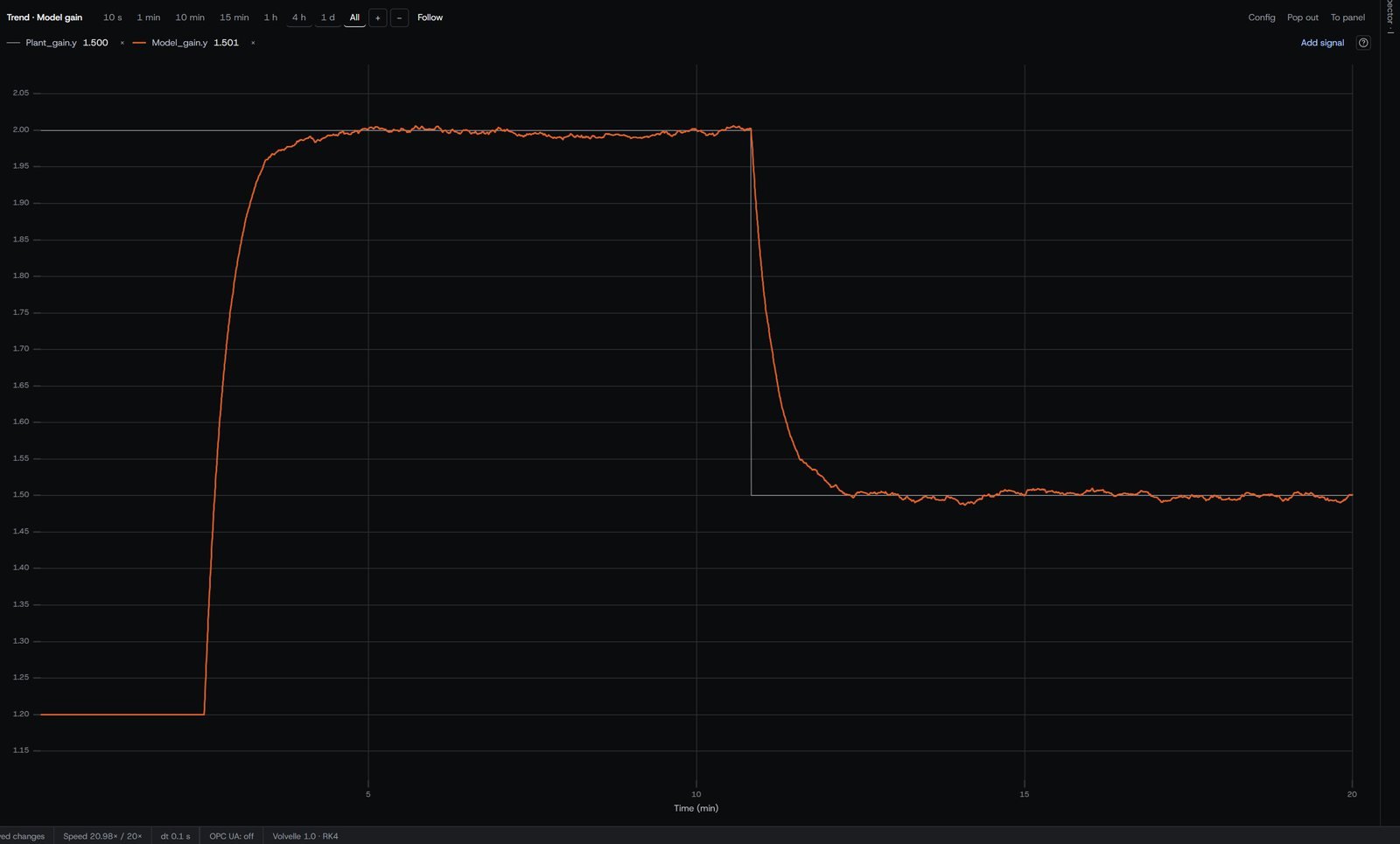
An Irama model can be corrected from measured plant data. In this demonstration a simulated plant stands in for real plant data: its gain drops by a quarter in a step at 11 minutes, and its measurement carries noise. The Irama model starts with the wrong gain and corrects itself from the measured data. The correction here is built from standard Irama blocks; built-in fitting to historian data is in development.
AI in Irama
Irama's project format and interfaces are open, so an AI agent can do the work an engineer does in the editor: build a model, change it, run it and read the results. The agent works outside Irama, on the project file and through Irama's interfaces.
Every block an agent places can be opened and checked by an engineer before the model is used.
- Draft a model Available now
- From a P&ID drawing or a written description. The distillation column and the digital twin demonstration on this page were drafted this way, then checked by an engineer.
- Change and extend Available now
- Ask for a new control loop, a different valve characteristic or a retuned controller, and the agent edits the model block by block.
- Run and report Available now
- The agent runs cases through Irama's interfaces, compares the trends and explains the result, tracing a response back to the blocks that cause it.
- Hybrid models In development
- Data-driven blocks alongside the physics-based blocks, for the parts of a process that are hard to model from physics alone.
- Physics-informed neural networks In development
- Neural networks trained inside Irama's own engine, with the model's equations as a constraint.
Current capabilities
- Build a dynamic model from a P&ID, using equipment templates drawn as standard P&ID symbols.
- Open any template to see and change the blocks inside it: integrators, lags, valves, controllers.
- Design control with PID, model predictive control and fuzzy logic blocks.
- Run faster than real time, compare cases, and trend any signal.
- Read from and write to plant control systems over OPC UA.
- Fit model parameters to plant data In development
- Online model updating from live plant data In development
Where Irama runs
- Platform
- Desktop application for Windows. Versions for macOS and Linux are planned.
- Network
- Runs fully offline. The model and its simulation engine run on the engineer's own computer.
- Plant connection
- OPC UA, reading and writing values. Writes are rarely needed. When they are, they go only to agreed tags, in velocity (incremental) form, behind the safety measures in the plant's control system.
Request a demonstration
Send us a short description of your process and what you want to study. The HEΔT team replies by email to arrange a demonstration of Irama on a comparable model.